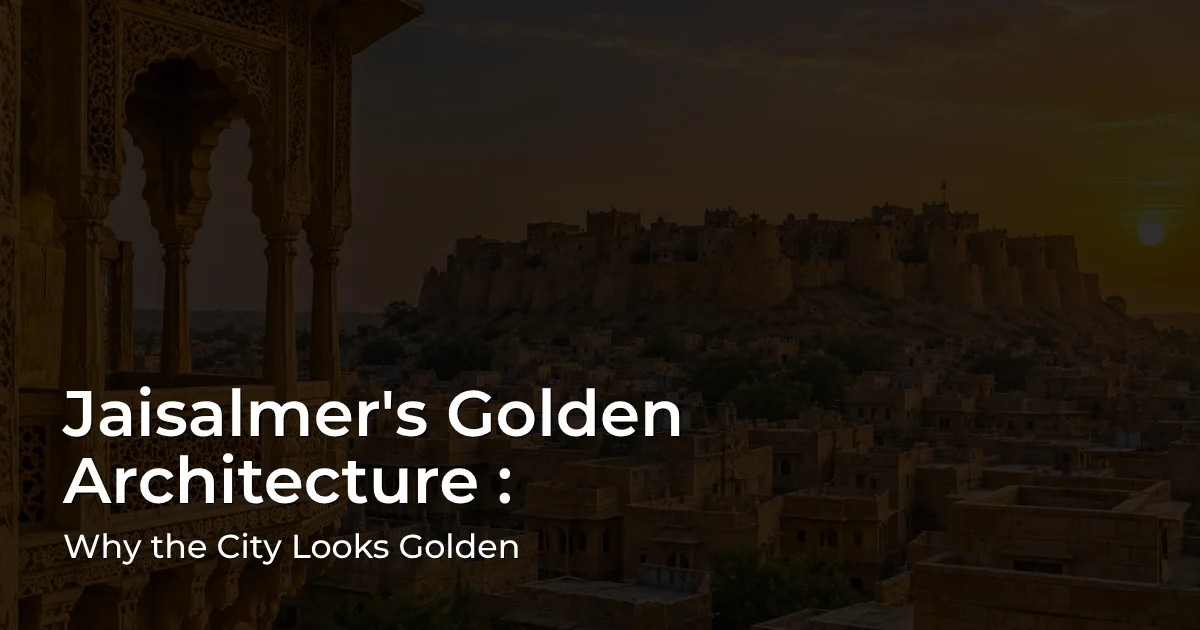
Jaisalmer Golden Architecture is one of the most recognizable features of the Golden City of Rajasthan. Built largely from warm yellow sandstone, the fort, havelis, temples and traditional homes create a striking golden appearance across the historic city. When sunlight falls on the sandstone walls, the colour becomes even more impressive, giving Jaisalmer its famous identity.
But the golden look is not only about colour. It is also connected with the region's history, craftsmanship, desert environment and architectural traditions.
Origins of Jaisalmer Golden Architecture
The story of the city's distinctive appearance begins with the extensive use of locally available yellow sandstone. For centuries, builders and craftsmen used this stone to construct forts, homes, temples and merchant mansions.
The availability of sandstone made it a practical building material, while skilled artisans turned it into beautifully carved architectural features.
Over generations, the consistent use of this stone created a visual identity that is now strongly associated with Jaisalmer. You can also explore the Jaisalmer Fort history to learn more about the city's historic architecture.
For more information about Rajasthan's heritage and destinations, visit Rajasthan Tourism.
Why Is Jaisalmer Called the Golden City?
Jaisalmer is popularly known as the Golden City because many of its historic buildings have a distinctive golden-yellow appearance.
The effect becomes particularly noticeable during sunrise and sunset. As sunlight changes throughout the day, the sandstone can appear yellow, honey-coloured or golden.
Jaisalmer Fort is one of the best places to experience this effect, especially when its massive sandstone walls glow under warm sunlight. If you are planning to explore the city, our Jaisalmer Travel Guide can help you plan your sightseeing.
Yellow Sandstone and the City's Unique Look
Yellow sandstone is the key material behind Jaisalmer's distinctive appearance. It has been used extensively in historic buildings throughout the city.
The stone can be shaped into detailed carvings, balconies, arches, windows and decorative patterns. Its natural warm tone also blends beautifully with the surrounding Thar Desert.
This combination of material, craftsmanship and landscape gives the city its unique architectural character.
Jaisalmer Fort and Its Golden Walls
Jaisalmer Fort is perhaps the most famous example of the city's historic architecture. Built on Trikuta Hill, the fort dominates the historic skyline of the city.
Its massive walls, gateways, temples and residential buildings are constructed largely from yellow sandstone. Under direct sunlight, the fort can appear almost golden from a distance.
The fort's architecture also demonstrates how defensive structures and everyday residential spaces developed together within the historic city. Read our detailed Jaisalmer Fort history to learn more about this iconic landmark.
Famous Havelis and Traditional Homes
The city's famous havelis add another layer to its architectural identity. Patwon Ki Haveli, Nathmal Ki Haveli and Salim Singh Ki Haveli are notable examples of detailed sandstone craftsmanship.
Their facades feature carved jharokhas, balconies, pillars, windows and decorative patterns. The golden stone provides a consistent visual connection between these buildings and the fort.
Traditional homes throughout the old city also contribute to the overall golden appearance.
Architecture Shaped by the Desert
Jaisalmer's architecture developed in response to its desert environment. Traditional buildings often feature courtyards, shaded areas, thick walls and carefully designed openings.
These features helped manage heat and create more comfortable spaces inside buildings.
The use of sandstone was therefore not only an artistic choice. It was also connected with the local environment and availability of building materials.
Best Places to See the Golden City
There are several places where travellers can experience Jaisalmer's architectural character.
Some popular locations include:
- Jaisalmer Fort
- Patwon Ki Haveli
- Nathmal Ki Haveli
- Salim Singh Ki Haveli
- Gadisar Lake
- Bada Bagh
- Amar Sagar
- Lodrawa
Walking through the old city is also a great way to notice smaller architectural details that can easily be missed during a quick sightseeing tour.
For more information about India's cultural destinations and heritage experiences, explore Incredible India.
Best Time for Golden Architecture Photography
For photography, early morning and late afternoon are generally excellent times to explore the city's sandstone architecture.
During these hours, softer sunlight creates shadows and highlights across carved surfaces. Sunset can produce especially warm tones across the fort and surrounding buildings.
A wide-angle lens can help capture complete facades, while a smartphone or zoom lens can be useful for detailed carvings and architectural patterns.
Travel Tips for Exploring the Old City
Keep these tips in mind:
- Explore the old city on foot where possible.
- Visit heritage buildings during cooler parts of the day.
- Carry water during longer walks.
- Wear comfortable footwear.
- Carry a camera for architectural details.
- Respect temples and residential areas.
- Ask permission before photographing people.
- Consider taking a local heritage walk for additional historical context.
Frequently Asked Questions
Why does Jaisalmer look golden?
Jaisalmer looks golden mainly because many historic buildings are constructed from yellow sandstone. Sunlight changes the appearance of the stone throughout the day.
What stone is used in Jaisalmer architecture?
Yellow sandstone is widely used in the historic architecture of Jaisalmer, including the fort, havelis, temples and traditional homes.
Why is Jaisalmer called the Golden City?
The city is popularly called the Golden City because its extensive yellow sandstone architecture creates a distinctive golden-yellow appearance.
Where can I see the golden architecture?
Jaisalmer Fort, Patwon Ki Haveli, Nathmal Ki Haveli and Salim Singh Ki Haveli are among the most notable places to experience the city's sandstone architecture.
Final Thoughts
Jaisalmer's Golden Architecture is the result of centuries of local craftsmanship, sandstone construction and adaptation to the desert environment. The consistent use of yellow sandstone across forts, temples, havelis and homes has created one of Rajasthan's most recognizable cityscapes.
From the massive walls of Jaisalmer Fort to the delicate carvings of the historic havelis, the Golden City offers countless opportunities to appreciate traditional architecture. Exploring these buildings during the softer morning or evening light makes the experience even more memorable.