Kuldhara Village History is closely connected with the Paliwal Brahmins, an old settlement near Jaisalmer that was eventually abandoned. Today, Kuldhara is known for its ancient ruins, traditional desert architecture and fascinating local stories. Exploring its past gives visitors an opportunity to understand how communities lived and adapted to the challenging environment of the Thar Desert.
Kuldhara Village History and Its Origins
The history of Kuldhara is connected with the Paliwal Brahmin community, which established settlements across the Jaisalmer region. Kuldhara developed as a well-organized village with homes, streets, community spaces and traditional systems for managing limited water in the desert.
The settlement benefited from the knowledge and skills of its residents, who adapted agriculture and daily life to the local environment. Its location also connected it with the wider network of villages and trading activity around Jaisalmer.
Over time, however, Kuldhara was abandoned, leaving behind the ruins that visitors can explore today.
For more information about Rajasthan's heritage and tourism destinations, visit Rajasthan Tourism.
Paliwal Brahmins and Kuldhara History
The Paliwal Brahmins played an important role in Kuldhara history. The community was associated with several settlements around Jaisalmer and was known for adapting successfully to desert conditions.
Water conservation was especially important in this region. Traditional methods of collecting and managing water helped communities maintain agriculture and everyday life despite limited rainfall.
The remains of Kuldhara provide clues about the lifestyle and planning of the people who once lived here.
Life in the Ancient Kuldhara Village
Life in the village was shaped by the harsh desert climate. Houses and streets were arranged in a practical way, while locally available materials were used for construction.
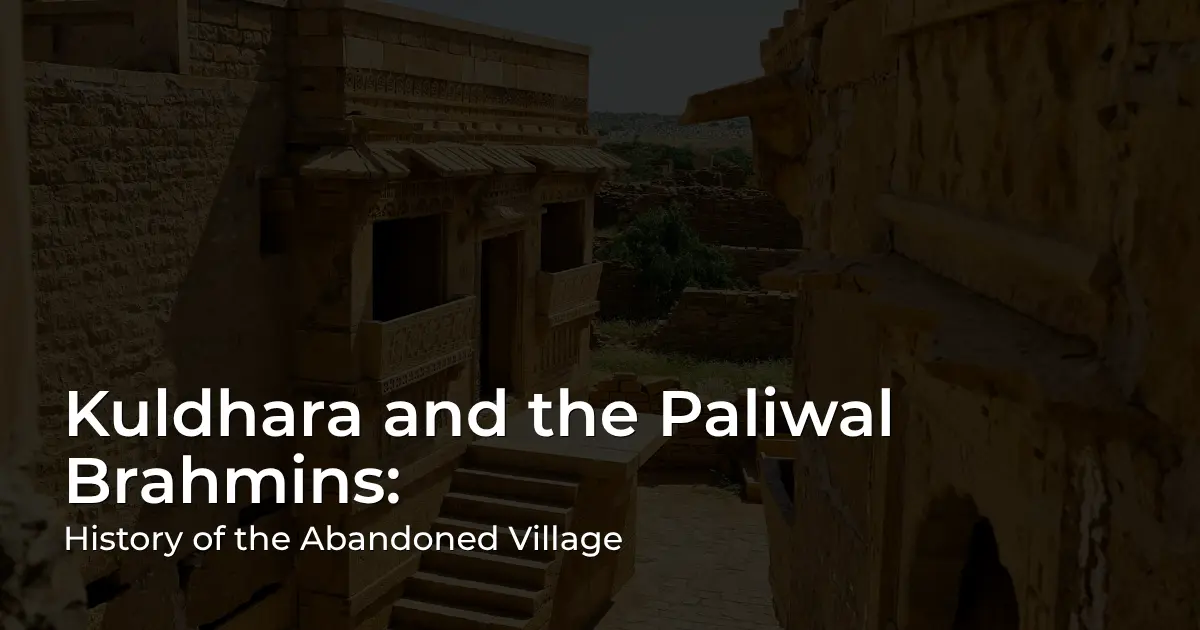
The surviving remains include walls, foundations and sections of old homes. These structures provide visitors with a glimpse into the layout of the former settlement.
The village was not simply a group of isolated houses. Its organized layout suggests a community that had developed systems for living together and making effective use of its surroundings.
Kuldhara Abandoned Village: Why Did People Leave?
The reason behind the abandonment of Kuldhara remains uncertain. One popular local tradition connects the departure of the villagers with the powerful minister Salim Singh and claims that the Paliwal community left Kuldhara and nearby settlements together.
Other historical discussions consider factors such as water availability, environmental conditions and changing economic circumstances.
Because different explanations exist, it is useful to distinguish between local legends and historically established information. The mystery surrounding the village has become an important part of its modern identity.
Kuldhara Ruins and Desert Architecture
The ruins are one of the most visible reminders of the village's past. Traditional sandstone construction, old walls, foundations and remains of homes can still be seen across the site.
The architecture reflects practical responses to desert conditions. Thick walls and compact layouts helped provide shade and protection from the harsh climate.
The combination of old sandstone structures and the surrounding desert also makes Kuldhara an interesting destination for heritage and travel photography.
Visitors can also explore nearby Bada Bagh Jaisalmer as part of their heritage itinerary.
Exploring Kuldhara Village History Today
Understanding Kuldhara Village History can make a visit more meaningful. Instead of seeing only abandoned buildings, visitors can look at the ruins as evidence of a community that once developed a functioning settlement in the desert.
Kuldhara is generally included in sightseeing routes around Jaisalmer and can be combined with attractions such as Bada Bagh, Amar Sagar and Lodrawa.
For travellers interested in Jaisalmer heritage, the village offers a different experience from the city's famous fort and havelis.
Best Time to Visit Kuldhara
The most comfortable months for exploring Kuldhara are generally October to March, when Jaisalmer's weather is more suitable for outdoor sightseeing.
Late afternoon is a popular time to visit because of the softer light and more pleasant temperatures. Early morning can also provide a quieter experience.
During summer, temperatures can become very high, so visitors should carry water and avoid prolonged exposure during the hottest part of the day.
Kuldhara Travel Tips for Visitors
Keep these points in mind when planning your visit:
- Carry enough drinking water.
- Wear comfortable footwear.
- Use sunscreen and sunglasses during daytime.
- Avoid climbing or damaging old structures.
- Respect the historic site and surrounding environment.
- Carry a camera if you enjoy heritage photography.
- Follow local entry and photography rules.
- Check current timings before travelling.
Frequently Asked Questions About Kuldhara History
Who lived in Kuldhara?
Kuldhara was historically inhabited by the Paliwal Brahmin community, which established several settlements in the Jaisalmer region.
Why did the Paliwal Brahmins leave Kuldhara?
The exact reason is uncertain. Local traditions tell different stories, while historical discussions also consider water availability, environmental conditions and economic changes.
Is the Kuldhara story historically proven?
Some aspects of the settlement's history are supported by surviving ruins and regional historical information. However, several popular stories surrounding its abandonment remain local traditions rather than fully established historical facts.
How far is Kuldhara from Jaisalmer?
Kuldhara is approximately 35 kilometres from Jaisalmer city and can be visited as part of a half-day sightseeing route.