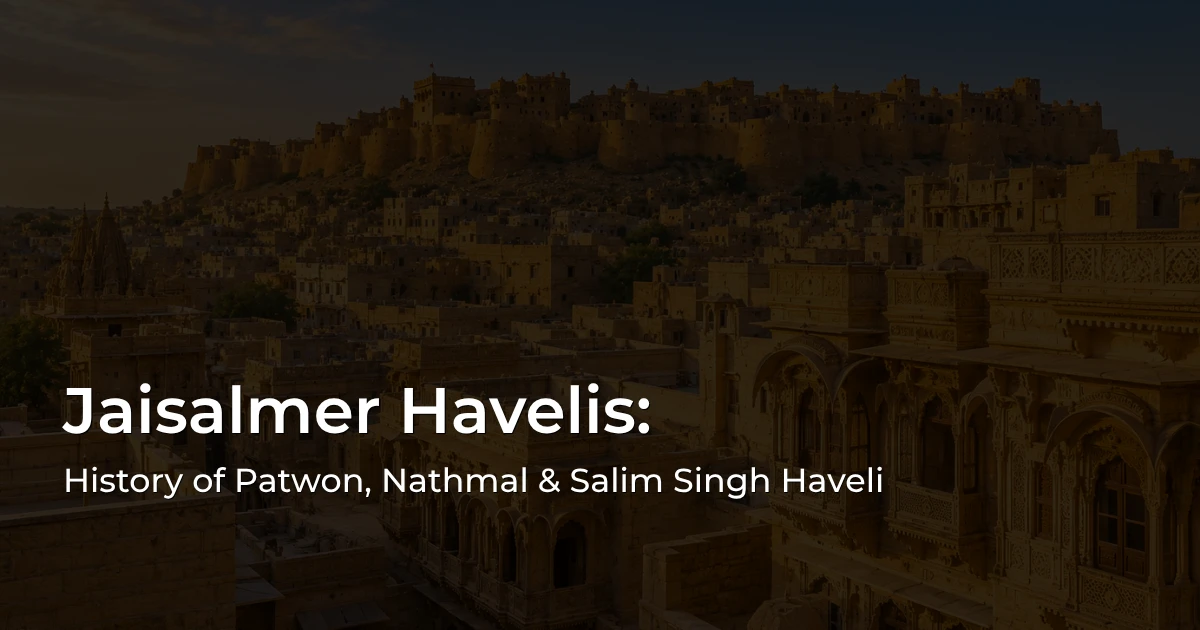
Jaisalmer Havelis are among the most beautiful examples of traditional architecture in Rajasthan. Built mainly from golden-yellow sandstone, these historic mansions showcase intricate carvings, artistic balconies, detailed facades and the rich merchant heritage of the Golden City. Among the most famous are Patwon Ki Haveli, Nathmal Ki Haveli and Salim Singh Ki Haveli.
Exploring these historic buildings is a great way to understand the culture, craftsmanship and trading history that helped shape Jaisalmer.
Jaisalmer Havelis and Their History
The history of Jaisalmer Havelis is closely connected with the city's prosperous merchant communities. Located along important trade routes, Jaisalmer became a centre for merchants and traders who built impressive residences to reflect their wealth and social status.
These mansions were not simply homes. Many included private living spaces, courtyards, storage areas and rooms connected with business activities.
The detailed sandstone work found across these buildings also demonstrates the skill of local craftsmen who transformed desert stone into intricate architectural designs. The use of golden sandstone is an important part of Jaisalmer Golden Architecture.
For more information about Rajasthan's heritage and destinations, visit Rajasthan Tourism.
Patwon Ki Haveli: A Famous Merchant Mansion
Patwon Ki Haveli is one of the best-known heritage attractions in Jaisalmer. The complex consists of a group of interconnected havelis associated with the wealthy Patwa merchant family.
Its facade features detailed sandstone carvings, balconies, windows and decorative elements. The building's scale and artistic craftsmanship make it an important example of the city's merchant-era architecture.
Visitors can explore the historic interiors and learn about the lifestyle associated with one of Jaisalmer's prominent merchant families.
Nathmal Ki Haveli and Its Unique Design
Nathmal Ki Haveli is known for its distinctive architecture and detailed stonework. The haveli was commissioned by Diwan Mohata Nathmal, an important official in the Jaisalmer state.
One of its interesting features is the artistic treatment of the two sides of the building. The carvings and decorative details showcase the creativity of the craftsmen who worked on the structure.
Visitors can notice floral patterns, animals, architectural motifs and finely carved balconies throughout the exterior.
Salim Singh Ki Haveli: An Unusual Facade
Salim Singh Ki Haveli is another well-known landmark near Jaisalmer Fort. It is particularly recognizable because of its distinctive upper section and decorative balconies.
The haveli reflects the architectural ambitions of its period, with detailed sandstone work and an unusual facade that makes it different from other historic mansions in the city.
Its location near the fort also makes it easy to include during a walking heritage tour of Jaisalmer.
Jaisalmer Haveli Architecture and Stone Carvings
One of the defining characteristics of Jaisalmer Haveli architecture is the extensive use of locally available sandstone. Skilled artisans created intricate patterns, jharokhas, pillars, arches and balconies from the stone.
The golden colour of the sandstone gives the buildings their famous appearance, especially when sunlight falls across the carved facades.
These architectural details are not only decorative but also reflect traditional responses to the desert climate, with courtyards, shaded spaces and carefully designed openings.
Why Are These Historic Havelis Important?
The historic havelis of Jaisalmer represent more than beautiful buildings. They tell the story of merchants, craftsmen, trade and urban life in the desert city.
Each haveli has its own architectural character, but together they demonstrate the importance of craftsmanship and commerce in Jaisalmer's development.
For travellers, visiting these buildings offers a chance to experience the city's heritage beyond Jaisalmer Fort.
Best Time to Explore Jaisalmer Havelis
The most comfortable season for exploring Jaisalmer is generally October to March. Cooler temperatures make it easier to walk through the old city and visit multiple heritage attractions.
Morning and late afternoon are particularly pleasant for walking tours. These times can also provide softer natural light for photographing the sandstone facades.
You can also explore Rajasthan's cultural and heritage destinations through Incredible India.
During the hotter months, plan outdoor sightseeing earlier in the day.
Photography Tips for the Havelis
Jaisalmer's historic mansions are excellent subjects for architectural photography.
Try these simple tips:
- Photograph the facades during soft morning or evening light.
- Capture close-up details of carvings and jharokhas.
- Use wider shots to show the complete structure.
- Look for interesting patterns, shadows and textures.
- Explore different viewpoints instead of taking only front-facing photographs.
- Follow photography rules inside heritage buildings.
Places to Visit Near Jaisalmer Havelis
Most of the famous havelis are located in and around the old city, making it easy to combine them with other attractions.
Popular nearby places include:
- Jaisalmer Fort
- Gadisar Lake
- Jaisalmer Palace
- Local markets
- Manak Chowk
- Gopa Chowk
- Desert safari departure points
A walking heritage tour can be a convenient way to explore several historic attractions in the old city.
Travel Tips for Visiting the Havelis
Keep these tips in mind:
- Wear comfortable footwear for walking.
- Carry water during sightseeing.
- Visit early or late in the day during warmer seasons.
- Respect private residential areas around heritage buildings.
- Follow photography restrictions where applicable.
- Take time to appreciate the smaller architectural details.
- Consider hiring a local guide for historical context.
Frequently Asked Questions About Jaisalmer Havelis
Which are the most famous havelis in Jaisalmer?
Patwon Ki Haveli, Nathmal Ki Haveli and Salim Singh Ki Haveli are among the city's most well-known historic mansions.
Why are Jaisalmer Havelis famous?
Jaisalmer Havelis are famous for their golden sandstone construction, intricate carvings, jharokhas, balconies and connection with the city's merchant heritage.
Which haveli is best for architecture?
Each has its own distinctive design. Patwon Ki Haveli is known for its impressive scale and carvings, Nathmal Ki Haveli for its detailed artistic work, and Salim Singh Ki Haveli for its distinctive upper facade.
How much time is needed to explore the havelis?
Around two to three hours can be useful for visiting the major havelis and exploring the surrounding old-city streets, depending on your pace and whether you visit interiors.